English
 Arabic
 French
 Spanish
 Portuguese
 Deutsch
 Turkish
 Dutch
Dutch
 Italiano
 Russian
 Romaian
 Portuguese (Brazil)
 Greek
Greek

Understanding how money moves in and out of a business
The cash flow statement is one of the most important financial reports because it shows one thing every business lives or dies by: cash.
While profit can be manipulated, cash never lies. It tells you whether the business can survive, pay bills, grow, and invest.
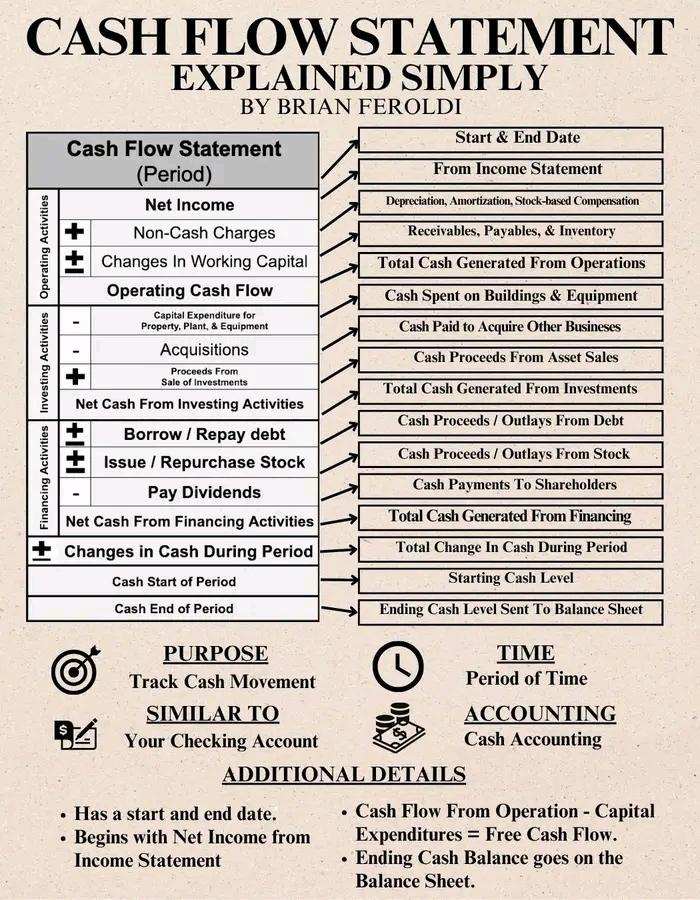
The cash flow statement is divided into three major sections:
Cash Flow from Operating Activities
This section shows how much actual cash the business generates from its core operations.
It answers: is the company’s main business bringing in money or burning money?
Key items you will see:
• Cash received from customers
• Cash paid to suppliers
• Cash paid to employees
• Interest paid
• Taxes paid
A positive operating cash flow means the business can sustain itself.
A negative one means the business is struggling operationally.
Cash Flow from Investing Activities
This shows where the business invests its money for future growth.
It answers: is the company investing in assets that generate future returns?
Key items:
• Buying or selling equipment
• Buying or selling properties
• Investments in securities
• Purchasing or selling subsidiaries
Negative investing cash flow is not always bad; it often means the company is expanding.
Positive investing cash flow might mean the company is selling assets.
Cash Flow from Financing Activities
This section shows how the business raises money or pays it back.
It answers: who is funding the business and how are they being repaid?
Key items:
• Proceeds from loans
• Loan repayments
• Issuing shares
• Paying dividends
A positive financing cash flow could mean the company is borrowing or raising capital.
A negative one often means the company is repaying debt or paying dividends.
Net Increase or Decrease in Cash
This is the final result of all three sections.
It shows the actual movement of cash during the period.
If total cash increased: the business is becoming more liquid.
If total cash decreased: liquidity is tightening and the company must be careful.
Why the Cash Flow Statement Matters
• It shows true business health, beyond profit.
• It reveals if growth is sustainable.
• It helps investors and lenders judge risk.
• It helps business owners plan for cash shortages.
Quick Tips to Analyse a Cash Flow Statement
• Always check if operating cash flow is consistently positive.
• Compare operating cash flow to net profit: if profit is high but cash is low, there is a problem.
• Watch out for companies surviving only through loans or new investors.
• Check if investments match long-term strategy.
• Monitor cash balance trends over several years.
The cash flow statement is one of the most important financial reports because it shows one thing every business lives or dies by: cash.
While profit can be manipulated, cash never lies. It tells you whether the business can survive, pay bills, grow, and invest.
The cash flow statement is divided into three major sections:
Cash Flow from Operating Activities
This section shows how much actual cash the business generates from its core operations.
It answers: is the company’s main business bringing in money or burning money?
Key items you will see:
• Cash received from customers
• Cash paid to suppliers
• Cash paid to employees
• Interest paid
• Taxes paid
A positive operating cash flow means the business can sustain itself.
A negative one means the business is struggling operationally.
Cash Flow from Investing Activities
This shows where the business invests its money for future growth.
It answers: is the company investing in assets that generate future returns?
Key items:
• Buying or selling equipment
• Buying or selling properties
• Investments in securities
• Purchasing or selling subsidiaries
Negative investing cash flow is not always bad; it often means the company is expanding.
Positive investing cash flow might mean the company is selling assets.
Cash Flow from Financing Activities
This section shows how the business raises money or pays it back.
It answers: who is funding the business and how are they being repaid?
Key items:
• Proceeds from loans
• Loan repayments
• Issuing shares
• Paying dividends
A positive financing cash flow could mean the company is borrowing or raising capital.
A negative one often means the company is repaying debt or paying dividends.
Net Increase or Decrease in Cash
This is the final result of all three sections.
It shows the actual movement of cash during the period.
If total cash increased: the business is becoming more liquid.
If total cash decreased: liquidity is tightening and the company must be careful.
Why the Cash Flow Statement Matters
• It shows true business health, beyond profit.
• It reveals if growth is sustainable.
• It helps investors and lenders judge risk.
• It helps business owners plan for cash shortages.
Quick Tips to Analyse a Cash Flow Statement
• Always check if operating cash flow is consistently positive.
• Compare operating cash flow to net profit: if profit is high but cash is low, there is a problem.
• Watch out for companies surviving only through loans or new investors.
• Check if investments match long-term strategy.
• Monitor cash balance trends over several years.
Understanding how money moves in and out of a business
The cash flow statement is one of the most important financial reports because it shows one thing every business lives or dies by: cash.
While profit can be manipulated, cash never lies. It tells you whether the business can survive, pay bills, grow, and invest.
The cash flow statement is divided into three major sections:
Cash Flow from Operating Activities
This section shows how much actual cash the business generates from its core operations.
It answers: is the company’s main business bringing in money or burning money?
Key items you will see:
• Cash received from customers
• Cash paid to suppliers
• Cash paid to employees
• Interest paid
• Taxes paid
A positive operating cash flow means the business can sustain itself.
A negative one means the business is struggling operationally.
Cash Flow from Investing Activities
This shows where the business invests its money for future growth.
It answers: is the company investing in assets that generate future returns?
Key items:
• Buying or selling equipment
• Buying or selling properties
• Investments in securities
• Purchasing or selling subsidiaries
Negative investing cash flow is not always bad; it often means the company is expanding.
Positive investing cash flow might mean the company is selling assets.
Cash Flow from Financing Activities
This section shows how the business raises money or pays it back.
It answers: who is funding the business and how are they being repaid?
Key items:
• Proceeds from loans
• Loan repayments
• Issuing shares
• Paying dividends
A positive financing cash flow could mean the company is borrowing or raising capital.
A negative one often means the company is repaying debt or paying dividends.
Net Increase or Decrease in Cash
This is the final result of all three sections.
It shows the actual movement of cash during the period.
If total cash increased: the business is becoming more liquid.
If total cash decreased: liquidity is tightening and the company must be careful.
Why the Cash Flow Statement Matters
• It shows true business health, beyond profit.
• It reveals if growth is sustainable.
• It helps investors and lenders judge risk.
• It helps business owners plan for cash shortages.
Quick Tips to Analyse a Cash Flow Statement
• Always check if operating cash flow is consistently positive.
• Compare operating cash flow to net profit: if profit is high but cash is low, there is a problem.
• Watch out for companies surviving only through loans or new investors.
• Check if investments match long-term strategy.
• Monitor cash balance trends over several years.

·159 Visualizações
·0 Anterior