Обновить до Про

  • From my box. Nawa

    Anonymous Post
    Please hide my identity.
    Sometimes I wonder if village people opened a branch office in my marriage.
    I contributed over 20 million naira to support my husband. We bought land for 8 million. The plan was to build a proper workshop so he can focus on his glass and window business something he even travelled abroad to learn.
    I thought I was investing in our future.Instead, I unknowingly funded a five-star guest house.
    This man bought six spring mattresses. Six. In a workshop. Added standing AC. But not for customers nor for business growth.For “private practicals.He didn’t tell me. I found out like a side character in my own movie.

    The same workshop that was supposed to showcase windows is now showcasing women. There is one Haus& gurl he keeps bringing there. The apprentice’s mother was even shouting one day, complaining loudly. Apparently, when Haus$ girl visit and oga is workinnng on her she will be shouting “ka ci mini duri.” That is the development happening inside my investment.
    Meanwhile, I have not rested since this business started. I supported, encouraged, defended, prayed. Only to realize I sponsored nonsens$ So now I have made up my mind.i want to sell the land and recover my money even the AC if possible.

    Is that harshhh ? Or is it the only sane thing a woman does when she discovers she financed her own disrespect?At this point, I don’t know whether to call it tragedyy. Please, tell me am I wrong?

    From my box. Nawa Anonymous Post Please hide my identity. Sometimes I wonder if village people opened a branch office in my marriage. I contributed over 20 million naira to support my husband. We bought land for 8 million. The plan was to build a proper workshop so he can focus on his glass and window business something he even travelled abroad to learn. I thought I was investing in our future.Instead, I unknowingly funded a five-star guest house. This man bought six spring mattresses. Six. In a workshop. Added standing AC. But not for customers nor for business growth.For “private practicals.He didn’t tell me. I found out like a side character in my own movie. The same workshop that was supposed to showcase windows is now showcasing women. There is one Haus& gurl he keeps bringing there. The apprentice’s mother was even shouting one day, complaining loudly. Apparently, when Haus$ girl visit and oga is workinnng on her she will be shouting “ka ci mini duri.” That is the development happening inside my investment. Meanwhile, I have not rested since this business started. I supported, encouraged, defended, prayed. Only to realize I sponsored nonsens$ So now I have made up my mind.i want to sell the land and recover my money even the AC if possible. Is that harshhh ? Or is it the only sane thing a woman does when she discovers she financed her own disrespect?At this point, I don’t know whether to call it tragedyy. Please, tell me am I wrong?
    Like
    1
    ·72 Просмотры ·0 предпросмотр

  • How to LEGALLY Own Shares on the Nigerian Exchange (NGX) – The Right Way!
    If you’ve ever wondered:
    “How do I truly own shares in Nigeria?”
    “How do I confirm that the shares are really mine?”
    “Is it paper or digital?”
    This is your simple, practical guide to getting started the correct way — without confusion or scams.
    Step 1: Choose a Licensed Stockbroker
    To buy shares on the Nigerian Exchange, you must go through a registered stockbroker.
    Why this is important:
    Licensed brokers are officially connected to the exchange and the clearing system that records ownership. If a platform isn’t licensed, your money is at risk.
    Some well-known brokers in Nigeria include:
    Bamboo (mobile-focused and beginner-friendly)
    Chapel Hill Denham (via InvestNaija)
    Stanbic IBTC Securities
    Afrinvest
    ARM Securities
    Always confirm the broker is licensed by the SEC and listed on the Nigerian Exchange before proceeding.
    Step 2: Open Your Trading Account
    Most brokers allow you to register online within minutes.
    You’ll typically need:
    Your full name (must match your BVN exactly)
    Valid ID (NIN, International Passport, etc.)
    A functional bank account
    Your BVN
    Important: Make sure all your details match across documents to avoid future delays.
    Step 3: Get Your CSCS Account (Your Real Proof of Ownership)
    After registration, your broker will open or link you to a CSCS account.
    The Central Securities Clearing System (CSCS) is the official digital system that records who owns shares in Nigeria.
    This is your real proof — not paper certificates.
    You’ll receive:
    Your CSCS number
    Your CHN (Clearing House Number)
    Keep these safe. They confirm that the shares legally belong to you.
    Step 4: Fund Your Brokerage Wallet
    Transfer money from your bank into your broker’s wallet inside the app.
    If you’re new, start small — even ₦5,000 to ₦50,000 is enough to begin learning.
    Investing is a skill. Start small, grow with confidence.
    Step 5: Buy Your First Shares
    Inside the app:
    Search for a company
    Enter how many shares you want
    Confirm your order
    You can buy shares of companies like:
    Dangote Cement
    BUA Foods
    Okomu Oil Palm Company
    MTN Nigeria
    Guaranty Trust Holding Company
    After purchase, it may take a short settlement period before the shares fully reflect in your portfolio.
    Step 6: Activate E-Dividend
    This is very important.
    When companies declare dividends, the money will be paid directly into your bank account — automatically.
    No chasing registrars. No paper warrants. No stress.
    Avoid These Costly Mistakes
    Don’t deal with unlicensed “agents”
    Don’t share your BVN PIN or banking password
    Don’t fall for “get rich quick” promises
    Don’t accept paper certificates from unknown sources
    Everything is digital now.
    Frequently Asked Questions
    What happens when dividends are paid?
    If you own the shares before the qualification date, the dividend is credited directly to your bank (once e-dividend is activated).
    What’s the minimum amount to start?
    Many platforms allow you to start from as low as ₦5,000.
    How do I confirm my shares?
    Check your broker’s app or request a CSCS statement for independent confirmation.
    Owning shares means owning a piece of real companies.
    Stop watching others build wealth.
    Take your first step today and become a shareholder.
    Knowledge is power. Action builds wealth.
    📈 How to LEGALLY Own Shares on the Nigerian Exchange (NGX) – The Right Way! If you’ve ever wondered: “How do I truly own shares in Nigeria?” “How do I confirm that the shares are really mine?” “Is it paper or digital?” This is your simple, practical guide to getting started the correct way — without confusion or scams. ✅ Step 1: Choose a Licensed Stockbroker To buy shares on the Nigerian Exchange, you must go through a registered stockbroker. Why this is important: Licensed brokers are officially connected to the exchange and the clearing system that records ownership. If a platform isn’t licensed, your money is at risk. Some well-known brokers in Nigeria include: Bamboo (mobile-focused and beginner-friendly) Chapel Hill Denham (via InvestNaija) Stanbic IBTC Securities Afrinvest ARM Securities 👉 Always confirm the broker is licensed by the SEC and listed on the Nigerian Exchange before proceeding. ✅ Step 2: Open Your Trading Account Most brokers allow you to register online within minutes. You’ll typically need: Your full name (must match your BVN exactly) Valid ID (NIN, International Passport, etc.) A functional bank account Your BVN ⚠️ Important: Make sure all your details match across documents to avoid future delays. ✅ Step 3: Get Your CSCS Account (Your Real Proof of Ownership) After registration, your broker will open or link you to a CSCS account. The Central Securities Clearing System (CSCS) is the official digital system that records who owns shares in Nigeria. This is your real proof — not paper certificates. You’ll receive: Your CSCS number Your CHN (Clearing House Number) Keep these safe. They confirm that the shares legally belong to you. ✅ Step 4: Fund Your Brokerage Wallet Transfer money from your bank into your broker’s wallet inside the app. If you’re new, start small — even ₦5,000 to ₦50,000 is enough to begin learning. Investing is a skill. Start small, grow with confidence. ✅ Step 5: Buy Your First Shares Inside the app: Search for a company Enter how many shares you want Confirm your order You can buy shares of companies like: Dangote Cement BUA Foods Okomu Oil Palm Company MTN Nigeria Guaranty Trust Holding Company After purchase, it may take a short settlement period before the shares fully reflect in your portfolio. ✅ Step 6: Activate E-Dividend This is very important. When companies declare dividends, the money will be paid directly into your bank account — automatically. No chasing registrars. No paper warrants. No stress. 🚨 Avoid These Costly Mistakes ❌ Don’t deal with unlicensed “agents” ❌ Don’t share your BVN PIN or banking password ❌ Don’t fall for “get rich quick” promises ❌ Don’t accept paper certificates from unknown sources Everything is digital now. 💡 Frequently Asked Questions What happens when dividends are paid? If you own the shares before the qualification date, the dividend is credited directly to your bank (once e-dividend is activated). What’s the minimum amount to start? Many platforms allow you to start from as low as ₦5,000. How do I confirm my shares? Check your broker’s app or request a CSCS statement for independent confirmation. Owning shares means owning a piece of real companies. Stop watching others build wealth. Take your first step today and become a shareholder. 📌 Knowledge is power. Action builds wealth.
    Like
    2
    ·125 Просмотры ·0 предпросмотр
  • In times of uncertainty, smart investors focus on capital preservation first, returns second.
    If your goal is to grow your money with minimal stress, here are four reliable, low-risk investment options available in Nigeria that can help you truly “sleep well at night.”
    1️⃣ Treasury Bills (T-Bills)
    Treasury Bills are short-term instruments issued by the Federal Government of Nigeria. When you invest, you’re essentially lending money to the government for 91, 182, or 364 days.
    They are widely regarded as one of the safest naira investments because they are government-backed.
    How returns work:
    They are issued at a discount. For example, instead of paying ₦100,000, you may pay less upfront and receive the full ₦100,000 at maturity. The difference is your return.
    How to invest:
    You can subscribe through your commercial bank or via licensed fintech/investment platforms.
    2️⃣ Federal Government Bonds (Including FGN Savings Bond)
    Federal Government Bonds are long-term versions of Treasury Bills, with tenors ranging from 2 to 30 years. Investors receive interest payments (called coupons) every six months until maturity.
    The FGN Savings Bond is structured specifically for retail investors and offers lower entry requirements.
    How to invest:
    Offers are published monthly by the Debt Management Office. You can subscribe through approved stockbrokers and investment firms.
    Best suited for: Investors seeking predictable income over a longer period.
    3️⃣ Money Market Mutual Funds
    Money Market Funds pool funds from multiple investors and are managed by professionals who invest in relatively stable instruments such as Treasury Bills and high-quality commercial papers.
    Key advantage:
    ✔ High liquidity (withdrawals often processed within 24–48 hours)
    ✔ Ideal for emergency funds
    ✔ Competitive returns compared to savings accounts
    How to invest:
    You can subscribe through registered asset management firms or through licensed investment apps that provide access to money market options.
    4️⃣ Fixed Deposits (Term Deposits)
    A Fixed Deposit is a straightforward agreement between you and your bank. You lock in a specific amount for a fixed period (e.g., 90–180 days) and receive a guaranteed interest rate.
    ✔ Predictable returns
    ✔ No market volatility
    ✔ Simple structure
    How to invest:
    Available directly via most Nigerian banking apps or at any bank branch.
    So, Which Option Is Best for You?
    That depends on:
    • Your investment timeline
    • Your need for liquidity
    • Your risk tolerance
    • Whether you prefer passive management or direct control
    If you want short-term safety → Treasury Bills
    If you want steady long-term income → Bonds
    If you want flexibility → Money Market Funds
    If you want simplicity → Fixed Deposits
    There is no one-size-fits-all answer — only what fits your financial goals.
    Which of these are you currently using? Or which one are you considering?
    Let’s discuss in the comments. I’m here to guide you.
    #SmartInvesting #WealthBuilding #NigeriaFinance #CapitalPreservation
    In times of uncertainty, smart investors focus on capital preservation first, returns second. If your goal is to grow your money with minimal stress, here are four reliable, low-risk investment options available in Nigeria that can help you truly “sleep well at night.” 1️⃣ Treasury Bills (T-Bills) Treasury Bills are short-term instruments issued by the Federal Government of Nigeria. When you invest, you’re essentially lending money to the government for 91, 182, or 364 days. They are widely regarded as one of the safest naira investments because they are government-backed. 💡 How returns work: They are issued at a discount. For example, instead of paying ₦100,000, you may pay less upfront and receive the full ₦100,000 at maturity. The difference is your return. 📌 How to invest: You can subscribe through your commercial bank or via licensed fintech/investment platforms. 2️⃣ Federal Government Bonds (Including FGN Savings Bond) Federal Government Bonds are long-term versions of Treasury Bills, with tenors ranging from 2 to 30 years. Investors receive interest payments (called coupons) every six months until maturity. The FGN Savings Bond is structured specifically for retail investors and offers lower entry requirements. 📌 How to invest: Offers are published monthly by the Debt Management Office. You can subscribe through approved stockbrokers and investment firms. Best suited for: Investors seeking predictable income over a longer period. 3️⃣ Money Market Mutual Funds Money Market Funds pool funds from multiple investors and are managed by professionals who invest in relatively stable instruments such as Treasury Bills and high-quality commercial papers. Key advantage: ✔ High liquidity (withdrawals often processed within 24–48 hours) ✔ Ideal for emergency funds ✔ Competitive returns compared to savings accounts 📌 How to invest: You can subscribe through registered asset management firms or through licensed investment apps that provide access to money market options. 4️⃣ Fixed Deposits (Term Deposits) A Fixed Deposit is a straightforward agreement between you and your bank. You lock in a specific amount for a fixed period (e.g., 90–180 days) and receive a guaranteed interest rate. ✔ Predictable returns ✔ No market volatility ✔ Simple structure 📌 How to invest: Available directly via most Nigerian banking apps or at any bank branch. So, Which Option Is Best for You? That depends on: • Your investment timeline • Your need for liquidity • Your risk tolerance • Whether you prefer passive management or direct control If you want short-term safety → Treasury Bills If you want steady long-term income → Bonds If you want flexibility → Money Market Funds If you want simplicity → Fixed Deposits There is no one-size-fits-all answer — only what fits your financial goals. Which of these are you currently using? Or which one are you considering? Let’s discuss in the comments. I’m here to guide you. #SmartInvesting #WealthBuilding #NigeriaFinance #CapitalPreservation
    ·146 Просмотры ·0 предпросмотр
  • SEA OF GREEN ON THE NGX THIS WEEK!
    The market closed the week on a strong bullish note, with several stocks hitting impressive gains from Monday’s opening bell to Friday’s close. Investors who positioned early definitely had something to smile about.
    Here’s a quick look at how some of the top performers moved:
    1️⃣ RT Briscoe (RTBRISCOE)
    ₦12.63 ➡ ₦17.42 | +37.9%
    2️⃣ Zichis Agro Allied (ZICHIS)
    ₦6.72 ➡ ₦10.80 | +60.7%
    3️⃣ ABC Transport (ABCTRAN)
    ₦5.74 ➡ ₦7.50 | +30.7%
    4️⃣ Aradel Holdings (ARADEL)
    ₦925.00 ➡ ₦997.00 | +7.8%
    5️⃣ Nestlé Nigeria (NESTLE)
    ₦2,420.00 ➡ ₦2,662.00 | +10.0%
    6️⃣ Union Dicon Salt (UNIONDICON)
    ₦18.90 ➡ ₦20.90 | +10.6%
    7️⃣ Infinity Trust Mortgage Bank (INFINITY)
    ₦9.00 ➡ ₦9.90 | +10.0%
    8️⃣ McNichols Plc (MCNICHO)
    ₦7.00 ➡ ₦7.70 | +10.0%
    9️⃣ Cornerstone Insurance Plc (CORNERST)
    ₦5.80 ➡ ₦6.38 | +10.0%
    Okomu Oil Palm Company (OKOMUOIL)
    ₦1,206.50 ➡ ₦1,327.00 | +9.99%
    1️⃣1️⃣ Red Star Express (REDSTAREX)
    ₦22.25 ➡ ₦24.45 | +9.89%
    1️⃣2️⃣ John Holt Plc (JOHNHOLT)
    ₦9.65 ➡ ₦10.60 | +9.84%
    1️⃣3️⃣ Japaul Gold & Ventures (JAPAULGOLD)
    ₦2.29 ➡ ₦2.51 | +9.61%
    1️⃣4️⃣ Secure Electronic Technology Plc (NSLTECH)
    ₦1.38 ➡ ₦1.51 | +9.42%
    1️⃣5️⃣ Dangote Sugar Refinery (DANGSUGAR)
    ₦75.40 ➡ ₦82.00 | +8.75%
    Reminder: Today’s top gainers can become next week’s pullbacks. The stock market rewards strategy, patience, and proper risk management — not emotions.
    Are you holding any of these stocks?
    Which one surprised you the most this week?
    #NigerianStockMarket #NGX #Investing #WealthBuilding
    🔥 SEA OF GREEN ON THE NGX THIS WEEK! 📈 The market closed the week on a strong bullish note, with several stocks hitting impressive gains from Monday’s opening bell to Friday’s close. Investors who positioned early definitely had something to smile about. Here’s a quick look at how some of the top performers moved: 1️⃣ RT Briscoe (RTBRISCOE) ₦12.63 ➡ ₦17.42 | 🔼 +37.9% 2️⃣ Zichis Agro Allied (ZICHIS) ₦6.72 ➡ ₦10.80 | 🔼 +60.7% 3️⃣ ABC Transport (ABCTRAN) ₦5.74 ➡ ₦7.50 | 🔼 +30.7% 4️⃣ Aradel Holdings (ARADEL) ₦925.00 ➡ ₦997.00 | 🔼 +7.8% 5️⃣ Nestlé Nigeria (NESTLE) ₦2,420.00 ➡ ₦2,662.00 | 🔼 +10.0% 6️⃣ Union Dicon Salt (UNIONDICON) ₦18.90 ➡ ₦20.90 | 🔼 +10.6% 7️⃣ Infinity Trust Mortgage Bank (INFINITY) ₦9.00 ➡ ₦9.90 | 🔼 +10.0% 8️⃣ McNichols Plc (MCNICHO) ₦7.00 ➡ ₦7.70 | 🔼 +10.0% 9️⃣ Cornerstone Insurance Plc (CORNERST) ₦5.80 ➡ ₦6.38 | 🔼 +10.0% 🔟 Okomu Oil Palm Company (OKOMUOIL) ₦1,206.50 ➡ ₦1,327.00 | 🔼 +9.99% 1️⃣1️⃣ Red Star Express (REDSTAREX) ₦22.25 ➡ ₦24.45 | 🔼 +9.89% 1️⃣2️⃣ John Holt Plc (JOHNHOLT) ₦9.65 ➡ ₦10.60 | 🔼 +9.84% 1️⃣3️⃣ Japaul Gold & Ventures (JAPAULGOLD) ₦2.29 ➡ ₦2.51 | 🔼 +9.61% 1️⃣4️⃣ Secure Electronic Technology Plc (NSLTECH) ₦1.38 ➡ ₦1.51 | 🔼 +9.42% 1️⃣5️⃣ Dangote Sugar Refinery (DANGSUGAR) ₦75.40 ➡ ₦82.00 | 🔼 +8.75% 💡 Reminder: Today’s top gainers can become next week’s pullbacks. The stock market rewards strategy, patience, and proper risk management — not emotions. 📊 Are you holding any of these stocks? Which one surprised you the most this week? #NigerianStockMarket #NGX #Investing #WealthBuilding
    Haha
    1
    ·146 Просмотры ·0 предпросмотр
  • Key Insights Shaping the Polycondensation Reactor Market

    The Polycondensation Reactor Market
    plays a critical role in the global chemical and polymer manufacturing ecosystem. Polycondensation reactors are essential for producing high-performance polymers such as polyesters, polyamides, and engineering plastics that are widely used across packaging, automotive, electronics, textiles, and construction industries. As material science advances and demand for efficient polymerization grows, this market continues to evolve in both technology and application.

    https://infinitymarketresearch.com/report/polycondensation-reactor-market/553


    1. Expanding Demand from Polymer Manufacturing Industries

    One of the primary growth drivers of the polycondensation reactor market is the expanding polymer manufacturing sector. Rising consumption of polyester fibers, PET resins, and specialty plastics has increased the need for reliable and scalable reactor systems. Manufacturers are increasingly investing in advanced reactors that deliver consistent molecular weight control, higher throughput, and improved thermal efficiency.

    2. Technological Advancements in Reactor Design

    Modern polycondensation reactors are benefiting from continuous improvements in design and process automation. Innovations such as enhanced mixing mechanisms, precise temperature control, and improved vacuum systems have significantly increased production efficiency. These advancements help reduce reaction time, energy consumption, and material loss, making reactor systems more cost-effective for large-scale industrial use.
    Key Insights Shaping the Polycondensation Reactor Market The Polycondensation Reactor Market plays a critical role in the global chemical and polymer manufacturing ecosystem. Polycondensation reactors are essential for producing high-performance polymers such as polyesters, polyamides, and engineering plastics that are widely used across packaging, automotive, electronics, textiles, and construction industries. As material science advances and demand for efficient polymerization grows, this market continues to evolve in both technology and application. https://infinitymarketresearch.com/report/polycondensation-reactor-market/553 1. Expanding Demand from Polymer Manufacturing Industries One of the primary growth drivers of the polycondensation reactor market is the expanding polymer manufacturing sector. Rising consumption of polyester fibers, PET resins, and specialty plastics has increased the need for reliable and scalable reactor systems. Manufacturers are increasingly investing in advanced reactors that deliver consistent molecular weight control, higher throughput, and improved thermal efficiency. 2. Technological Advancements in Reactor Design Modern polycondensation reactors are benefiting from continuous improvements in design and process automation. Innovations such as enhanced mixing mechanisms, precise temperature control, and improved vacuum systems have significantly increased production efficiency. These advancements help reduce reaction time, energy consumption, and material loss, making reactor systems more cost-effective for large-scale industrial use.
    INFINITYMARKETRESEARCH.COM
    Polycondensation Reactor Market Size, Growth and Analysis | IMR
    Polycondensation Reactor Marketprojected to hit USD xx Billion in 2025, growing at a xx% CAGR. Explore in-depth industry size, share, key segments, top player
    Like
    1
    ·171 Просмотры ·0 предпросмотр
  • A practical guide for beginners, business owners, and young accountants

    Many people read a profit and loss statement but ignore the cash flow statement. Yet this report reveals the real truth about a company’s health: is cash actually coming in, or is the business quietly dying?

    Here is exactly how to analyse it step by step:

    Start with Operating Activities
    This is the most important section. It shows whether the company’s core business generates cash or consumes it.

    What to check:
    • Is operating cash flow positive or negative?
    • Is it increasing or declining year after year?
    • Is it strong enough to cover daily expenses without borrowing?

    Red flag: A company with profit but negative operating cash flow is in danger.

    Compare Operating Cash Flow to Net Profit
    This helps you detect accounting tricks or unsustainable earnings.

    If operating cash flow is consistently lower than profit, the company’s reported profit may not be real.

    Green signal: Cash flow > Net profit
    Warning signal: Cash flow < Net profit over several periods

    Check Investing Activities
    This section shows how the company grows.

    Positive investing cash flow usually means the company is selling assets.
    Negative investing cash flow often means the company is buying new assets for expansion.

    What to check:
    • Is the company investing in productive assets or selling off assets to survive?
    • Is the investment consistent with long-term growth?

    Red flag: Continually selling assets to create cash.

    Review Financing Activities
    Here you see how the company is funded.

    Positive financing cash flow: raising money from loans or issuing shares.
    Negative financing cash flow: paying debts, paying interest, or paying dividends.

    What to check:
    • Is the company depending too much on loans to stay alive?
    • Is debt repayment affecting available cash?
    • Are dividends draining cash while operations are weak?

    Red flag: The company survives only through borrowing.

    Evaluate the Net Cash Movement
    This is the final summary of all the above.

    Ask:
    • Did total cash increase or decrease?
    • Is the cash balance enough for short-term obligations?
    • Is the trend stable over several years?

    Green signal: Strong, stable, increasing cash balance.
    Warning signal: Declining cash despite strong revenue.

    Check Cash Flow Ratios (Simple But Powerful)
    Operating Cash Flow Ratio:
    Operating Cash Flow / Current Liabilities
    This shows if cash coming in can pay short-term obligations.

    Cash Conversion Ratio:
    Operating Cash Flow / Net Income
    This shows how real the company’s profit is.

    Look for Patterns Over 3 to 5 Years
    Never judge with one period.
    Trends tell the real story.

    Questions to ask:
    • Is operating cash flow consistent?
    • Are investments strategic?
    • Is financing showing dependence or stability?

    Link Cash Flow to Business Reality
    Cash flow never works alone. Compare it with:
    • Revenue trends
    • Expenses
    • Profit margins
    • Debt levels
    • Asset growth

    This gives you the full picture of financial strength.

    Summary: What Good Cash Flow Looks Like
    • Positive operating cash flow
    • Reasonable, strategic investments
    • Controlled financing activities
    • Increasing cash balance year after year
    • Cash flow supporting profit, not contradicting it

    A practical guide for beginners, business owners, and young accountants Many people read a profit and loss statement but ignore the cash flow statement. Yet this report reveals the real truth about a company’s health: is cash actually coming in, or is the business quietly dying? Here is exactly how to analyse it step by step: Start with Operating Activities This is the most important section. It shows whether the company’s core business generates cash or consumes it. What to check: • Is operating cash flow positive or negative? • Is it increasing or declining year after year? • Is it strong enough to cover daily expenses without borrowing? Red flag: A company with profit but negative operating cash flow is in danger. Compare Operating Cash Flow to Net Profit This helps you detect accounting tricks or unsustainable earnings. If operating cash flow is consistently lower than profit, the company’s reported profit may not be real. Green signal: Cash flow > Net profit Warning signal: Cash flow < Net profit over several periods Check Investing Activities This section shows how the company grows. Positive investing cash flow usually means the company is selling assets. Negative investing cash flow often means the company is buying new assets for expansion. What to check: • Is the company investing in productive assets or selling off assets to survive? • Is the investment consistent with long-term growth? Red flag: Continually selling assets to create cash. Review Financing Activities Here you see how the company is funded. Positive financing cash flow: raising money from loans or issuing shares. Negative financing cash flow: paying debts, paying interest, or paying dividends. What to check: • Is the company depending too much on loans to stay alive? • Is debt repayment affecting available cash? • Are dividends draining cash while operations are weak? Red flag: The company survives only through borrowing. Evaluate the Net Cash Movement This is the final summary of all the above. Ask: • Did total cash increase or decrease? • Is the cash balance enough for short-term obligations? • Is the trend stable over several years? Green signal: Strong, stable, increasing cash balance. Warning signal: Declining cash despite strong revenue. Check Cash Flow Ratios (Simple But Powerful) Operating Cash Flow Ratio: Operating Cash Flow / Current Liabilities This shows if cash coming in can pay short-term obligations. Cash Conversion Ratio: Operating Cash Flow / Net Income This shows how real the company’s profit is. Look for Patterns Over 3 to 5 Years Never judge with one period. Trends tell the real story. Questions to ask: • Is operating cash flow consistent? • Are investments strategic? • Is financing showing dependence or stability? Link Cash Flow to Business Reality Cash flow never works alone. Compare it with: • Revenue trends • Expenses • Profit margins • Debt levels • Asset growth This gives you the full picture of financial strength. Summary: What Good Cash Flow Looks Like • Positive operating cash flow • Reasonable, strategic investments • Controlled financing activities • Increasing cash balance year after year • Cash flow supporting profit, not contradicting it
    ·160 Просмотры ·0 предпросмотр
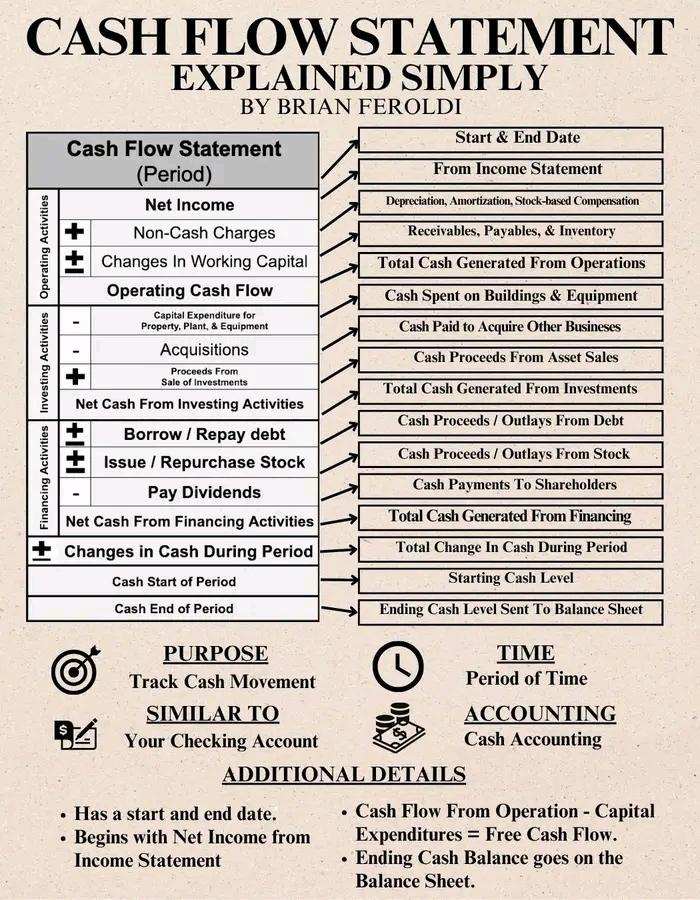
  • Understanding how money moves in and out of a business

    The cash flow statement is one of the most important financial reports because it shows one thing every business lives or dies by: cash.
    While profit can be manipulated, cash never lies. It tells you whether the business can survive, pay bills, grow, and invest.

    The cash flow statement is divided into three major sections:

    Cash Flow from Operating Activities
    This section shows how much actual cash the business generates from its core operations.
    It answers: is the company’s main business bringing in money or burning money?

    Key items you will see:
    • Cash received from customers
    • Cash paid to suppliers
    • Cash paid to employees
    • Interest paid
    • Taxes paid

    A positive operating cash flow means the business can sustain itself.
    A negative one means the business is struggling operationally.

    Cash Flow from Investing Activities
    This shows where the business invests its money for future growth.
    It answers: is the company investing in assets that generate future returns?

    Key items:
    • Buying or selling equipment
    • Buying or selling properties
    • Investments in securities
    • Purchasing or selling subsidiaries

    Negative investing cash flow is not always bad; it often means the company is expanding.
    Positive investing cash flow might mean the company is selling assets.

    Cash Flow from Financing Activities
    This section shows how the business raises money or pays it back.
    It answers: who is funding the business and how are they being repaid?

    Key items:
    • Proceeds from loans
    • Loan repayments
    • Issuing shares
    • Paying dividends

    A positive financing cash flow could mean the company is borrowing or raising capital.
    A negative one often means the company is repaying debt or paying dividends.

    Net Increase or Decrease in Cash
    This is the final result of all three sections.
    It shows the actual movement of cash during the period.

    If total cash increased: the business is becoming more liquid.
    If total cash decreased: liquidity is tightening and the company must be careful.

    Why the Cash Flow Statement Matters
    • It shows true business health, beyond profit.
    • It reveals if growth is sustainable.
    • It helps investors and lenders judge risk.
    • It helps business owners plan for cash shortages.

    Quick Tips to Analyse a Cash Flow Statement
    • Always check if operating cash flow is consistently positive.
    • Compare operating cash flow to net profit: if profit is high but cash is low, there is a problem.
    • Watch out for companies surviving only through loans or new investors.
    • Check if investments match long-term strategy.
    • Monitor cash balance trends over several years.
    Understanding how money moves in and out of a business The cash flow statement is one of the most important financial reports because it shows one thing every business lives or dies by: cash. While profit can be manipulated, cash never lies. It tells you whether the business can survive, pay bills, grow, and invest. The cash flow statement is divided into three major sections: Cash Flow from Operating Activities This section shows how much actual cash the business generates from its core operations. It answers: is the company’s main business bringing in money or burning money? Key items you will see: • Cash received from customers • Cash paid to suppliers • Cash paid to employees • Interest paid • Taxes paid A positive operating cash flow means the business can sustain itself. A negative one means the business is struggling operationally. Cash Flow from Investing Activities This shows where the business invests its money for future growth. It answers: is the company investing in assets that generate future returns? Key items: • Buying or selling equipment • Buying or selling properties • Investments in securities • Purchasing or selling subsidiaries Negative investing cash flow is not always bad; it often means the company is expanding. Positive investing cash flow might mean the company is selling assets. Cash Flow from Financing Activities This section shows how the business raises money or pays it back. It answers: who is funding the business and how are they being repaid? Key items: • Proceeds from loans • Loan repayments • Issuing shares • Paying dividends A positive financing cash flow could mean the company is borrowing or raising capital. A negative one often means the company is repaying debt or paying dividends. Net Increase or Decrease in Cash This is the final result of all three sections. It shows the actual movement of cash during the period. If total cash increased: the business is becoming more liquid. If total cash decreased: liquidity is tightening and the company must be careful. Why the Cash Flow Statement Matters • It shows true business health, beyond profit. • It reveals if growth is sustainable. • It helps investors and lenders judge risk. • It helps business owners plan for cash shortages. Quick Tips to Analyse a Cash Flow Statement • Always check if operating cash flow is consistently positive. • Compare operating cash flow to net profit: if profit is high but cash is low, there is a problem. • Watch out for companies surviving only through loans or new investors. • Check if investments match long-term strategy. • Monitor cash balance trends over several years.
    Love
    1
    ·149 Просмотры ·0 предпросмотр
  • 𝗜𝗡𝗧𝗥𝗢𝗗𝗨𝗖𝗧𝗜𝗢𝗡 𝗧𝗢 𝗔𝗖𝗖𝗢𝗨𝗡𝗧𝗜𝗡𝗚

    Accounting is the language of business. It helps you record, classify, and summarize financial transactions so you can understand the performance and financial health of any organization. Whether you are a student, entrepreneur, or professional, mastering accounting gives you control over money and better decision making.

    𝗪𝗵𝘆 𝗜𝘁 𝗠𝗮𝘁𝘁𝗲𝗿𝘀
    • It helps track income and expenses
    • It supports planning, budgeting, and forecasting
    • It ensures compliance with laws and standards
    • It reveals profit, cash flow, and financial strength
    • It allows owners and managers to make informed decisions

    𝗠𝗮𝗶𝗻 𝗔𝗿𝗲𝗮𝘀 𝗼𝗳 𝗔𝗰𝗰𝗼𝘂𝗻𝘁𝗶𝗻𝗴
    • Financial accounting
    • Management accounting
    • Cost accounting
    • Taxation
    • Auditing

    When you grasp the basics, the rest becomes easier. One of the fundamental building blocks of accounting is the concept of Debits and Credits.

    𝗨𝗡𝗗𝗘𝗥𝗦𝗧𝗔𝗡𝗗𝗜𝗡𝗚 𝗗𝗘𝗕𝗜𝗧𝗦 𝗔𝗡𝗗 𝗖𝗥𝗘𝗗𝗜𝗧𝗦

    Every transaction has two sides. One account is debited and another is credited. This is what keeps the accounting equation in balance:

    Assets = Liabilities + Equity

    𝗛𝗲𝗿𝗲 𝗶𝘀 𝗵𝗼𝘄 𝗗𝗲𝗯𝗶𝘁𝘀 𝗮𝗻𝗱 𝗖𝗿𝗲𝗱𝗶𝘁𝘀 𝗪𝗼𝗿𝗸

    1️⃣ Assets
    • Debit increases
    • Credit decreases
    Example buying equipment for cash increases Equipment (debit) and decreases Cash (credit)

    2️⃣ Liabilities
    • Debit decreases
    • Credit increases
    Example taking a loan increases Loan Payable (credit)

    3️⃣ Equity
    • Debit decreases
    • Credit increases
    Example owner investing capital increases Equity (credit)

    4️⃣ Revenue
    • Debit decreases
    • Credit increases
    Example making sales increases Revenue (credit)

    5️⃣ Expenses
    • Debit increases
    • Credit decreases
    Example paying rent increases Rent Expense (debit)

    𝗦𝗶𝗺𝗽𝗹𝗲 𝗪𝗮𝘆 𝗧𝗼 𝗥𝗲𝗺𝗲𝗺𝗯𝗲𝗿
    Assets and Expenses increase on the Debit side
    Liabilities Equity and Revenue increase on the Credit side

    𝗘𝘅𝗮𝗺𝗽𝗹𝗲 𝗧𝗿𝗮𝗻𝘀𝗮𝗰𝘁𝗶𝗼𝗻
    You receive cash for a sale
    Debit Cash
    Credit Sales Revenue

    𝗞𝗲𝘆 𝗧𝗮𝗸𝗲𝗮𝘄𝗮𝘆
    Debits and credits are not good or bad. They are simply tools to keep the books balanced and ensure that every transaction is recorded correctly. Master these and you can understand any accounting system with confidence.

    #everyone Accounting Knowledge Concepts
    𝗜𝗡𝗧𝗥𝗢𝗗𝗨𝗖𝗧𝗜𝗢𝗡 𝗧𝗢 𝗔𝗖𝗖𝗢𝗨𝗡𝗧𝗜𝗡𝗚 Accounting is the language of business. It helps you record, classify, and summarize financial transactions so you can understand the performance and financial health of any organization. Whether you are a student, entrepreneur, or professional, mastering accounting gives you control over money and better decision making. 𝗪𝗵𝘆 𝗜𝘁 𝗠𝗮𝘁𝘁𝗲𝗿𝘀 • It helps track income and expenses • It supports planning, budgeting, and forecasting • It ensures compliance with laws and standards • It reveals profit, cash flow, and financial strength • It allows owners and managers to make informed decisions 𝗠𝗮𝗶𝗻 𝗔𝗿𝗲𝗮𝘀 𝗼𝗳 𝗔𝗰𝗰𝗼𝘂𝗻𝘁𝗶𝗻𝗴 • Financial accounting • Management accounting • Cost accounting • Taxation • Auditing When you grasp the basics, the rest becomes easier. One of the fundamental building blocks of accounting is the concept of Debits and Credits. 𝗨𝗡𝗗𝗘𝗥𝗦𝗧𝗔𝗡𝗗𝗜𝗡𝗚 𝗗𝗘𝗕𝗜𝗧𝗦 𝗔𝗡𝗗 𝗖𝗥𝗘𝗗𝗜𝗧𝗦 Every transaction has two sides. One account is debited and another is credited. This is what keeps the accounting equation in balance: Assets = Liabilities + Equity 𝗛𝗲𝗿𝗲 𝗶𝘀 𝗵𝗼𝘄 𝗗𝗲𝗯𝗶𝘁𝘀 𝗮𝗻𝗱 𝗖𝗿𝗲𝗱𝗶𝘁𝘀 𝗪𝗼𝗿𝗸 1️⃣ Assets • Debit increases • Credit decreases Example buying equipment for cash increases Equipment (debit) and decreases Cash (credit) 2️⃣ Liabilities • Debit decreases • Credit increases Example taking a loan increases Loan Payable (credit) 3️⃣ Equity • Debit decreases • Credit increases Example owner investing capital increases Equity (credit) 4️⃣ Revenue • Debit decreases • Credit increases Example making sales increases Revenue (credit) 5️⃣ Expenses • Debit increases • Credit decreases Example paying rent increases Rent Expense (debit) 𝗦𝗶𝗺𝗽𝗹𝗲 𝗪𝗮𝘆 𝗧𝗼 𝗥𝗲𝗺𝗲𝗺𝗯𝗲𝗿 Assets and Expenses increase on the Debit side Liabilities Equity and Revenue increase on the Credit side 𝗘𝘅𝗮𝗺𝗽𝗹𝗲 𝗧𝗿𝗮𝗻𝘀𝗮𝗰𝘁𝗶𝗼𝗻 You receive cash for a sale Debit Cash Credit Sales Revenue 𝗞𝗲𝘆 𝗧𝗮𝗸𝗲𝗮𝘄𝗮𝘆 Debits and credits are not good or bad. They are simply tools to keep the books balanced and ensure that every transaction is recorded correctly. Master these and you can understand any accounting system with confidence. #everyone Accounting Knowledge Concepts
    Like
    1
    ·265 Просмотры ·0 предпросмотр
  • "Stop Waiting. Start Executing."
    .
    .
    .
    .
    .
    .
    .
    #SuccessMindset #TakeAction #ExecutionOverExcuses #NoMoreWaiting #SelfGrowthJourney #MindsetShift #DailyMotivation #GrindAndGrow #DisciplineEqualsFreedom #WinningMindset #WealthMindset #FinancialEducation #MoneyMatters #InvestSmart #FinancialFreedom #BreakTheBarriers #FearToWealth #IgnoranceToKnowledge #WealthBuilding #SmartInvesting #FinanceTips #MoneyWisdom #LearnAndEarn #FinancialLiteracy #WealthCreation #MoneyGoals #InvestWisely #FinancialEmpowerment #GrowYourWealth #DebunkTheMyths
    @topfans
    🔥 "Stop Waiting. Start Executing." . . . . . . . #SuccessMindset #TakeAction #ExecutionOverExcuses #NoMoreWaiting #SelfGrowthJourney #MindsetShift #DailyMotivation #GrindAndGrow #DisciplineEqualsFreedom #WinningMindset #WealthMindset #FinancialEducation #MoneyMatters #InvestSmart #FinancialFreedom #BreakTheBarriers #FearToWealth #IgnoranceToKnowledge #WealthBuilding #SmartInvesting #FinanceTips #MoneyWisdom #LearnAndEarn #FinancialLiteracy #WealthCreation #MoneyGoals #InvestWisely #FinancialEmpowerment #GrowYourWealth #DebunkTheMyths @topfans
    Like
    2
    ·576 Просмотры ·0 предпросмотр
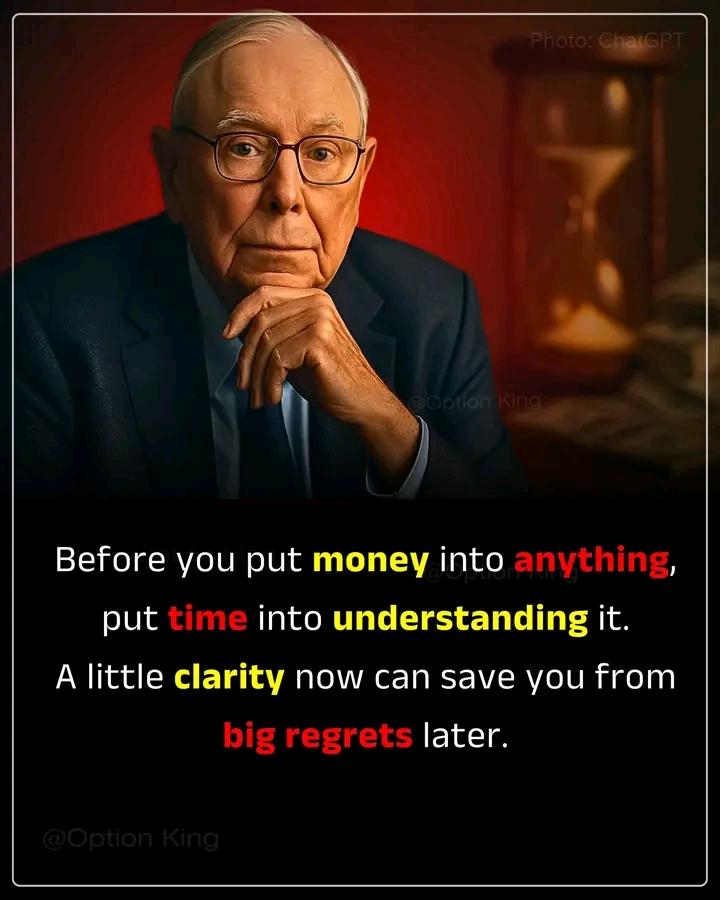
  • Start investing early. Perfect timing won’t grow your money. Time will.
    Start investing early. Perfect timing won’t grow your money. Time will.
    ·164 Просмотры ·0 предпросмотр
  • Jarvis has NO CAR
    NO HOUSE

    Guess what she has ? A big shop in lagos , invested heavily into real Estates and bought shares in many companies .

    The girl knows that if tomorrow there is no longer TikTok, she will be very fine still .

    This is why School is really fine , she is investing and same time we heard she is going in for her Master’s program .

    No EFCC or even Taxation people will come for her , she flaunts nothing . Just building and growing .

    Moral lesson : Sometimes we wish she can advise Peller , no be cars all the time oh
    Jarvis has NO CAR NO HOUSE Guess what she has ? A big shop in lagos , invested heavily into real Estates and bought shares in many companies . The girl knows that if tomorrow there is no longer TikTok, she will be very fine still . This is why School is really fine , she is investing and same time we heard she is going in for her Master’s program . No EFCC or even Taxation people will come for her , she flaunts nothing . Just building and growing . Moral lesson : Sometimes we wish she can advise Peller , no be cars all the time oh 🙌🙌
    ·378 Просмотры ·0 предпросмотр
  • Knowledge First. Investing Later.
    Knowledge First. Investing Later.
    Love
    1
    ·195 Просмотры ·0 предпросмотр
Расширенные страницы
EarnNaija https://earnnaija.com