Atualize para o Pro

  • Antimatter, Mathematics, and the Debate About Cosmic Design
    A discussion linking physics and philosophy has emerged after commentary attributed to a researcher associated with Harvard University suggested that the mathematical precision governing Antimatter could raise questions about whether the universe shows signs of intentional design.
    Antimatter remains one of modern physics’ biggest puzzles. According to current cosmological models, the early universe should have produced equal amounts of matter and antimatter. When matter and antimatter meet, they destroy each other. Yet the observable universe is dominated by matter. Scientists still investigate why a tiny imbalance occurred — an imbalance that ultimately allowed galaxies, stars, planets, and life to exist.
    The philosophical argument highlights how the mathematical laws describing particle behavior appear highly structured and predictable. Supporters of design-based interpretations suggest that such precision might hint at deeper meaning or intentional structure behind physical laws.
    Critics, including many physicists, argue that mathematical consistency does not necessarily imply a designer. They maintain that natural laws can exist without intentional creation and that the matter–antimatter imbalance remains an open scientific question currently studied through particle physics experiments and cosmological research.
    The discussion sits at the intersection of science, philosophy, and theology. While antimatter research continues to expand scientific understanding of the universe, it also fuels broader reflection on existence, origins, and the nature of cosmic order.
    #Science #Physics #Antimatter #Cosmology #Philosophy #Universe
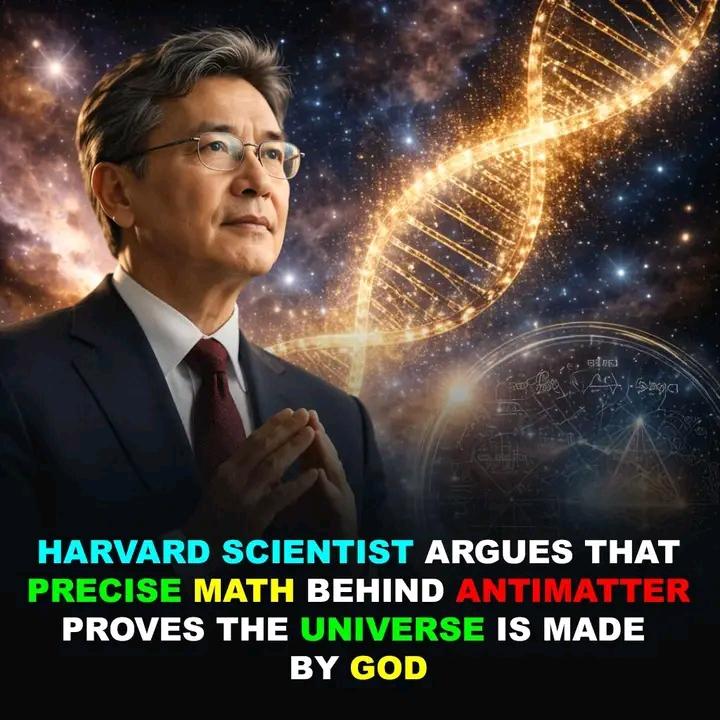
    Antimatter, Mathematics, and the Debate About Cosmic Design A discussion linking physics and philosophy has emerged after commentary attributed to a researcher associated with Harvard University suggested that the mathematical precision governing Antimatter could raise questions about whether the universe shows signs of intentional design. Antimatter remains one of modern physics’ biggest puzzles. According to current cosmological models, the early universe should have produced equal amounts of matter and antimatter. When matter and antimatter meet, they destroy each other. Yet the observable universe is dominated by matter. Scientists still investigate why a tiny imbalance occurred — an imbalance that ultimately allowed galaxies, stars, planets, and life to exist. The philosophical argument highlights how the mathematical laws describing particle behavior appear highly structured and predictable. Supporters of design-based interpretations suggest that such precision might hint at deeper meaning or intentional structure behind physical laws. Critics, including many physicists, argue that mathematical consistency does not necessarily imply a designer. They maintain that natural laws can exist without intentional creation and that the matter–antimatter imbalance remains an open scientific question currently studied through particle physics experiments and cosmological research. The discussion sits at the intersection of science, philosophy, and theology. While antimatter research continues to expand scientific understanding of the universe, it also fuels broader reflection on existence, origins, and the nature of cosmic order. #Science #Physics #Antimatter #Cosmology #Philosophy #Universe
    ·237 Visualizações ·0 Anterior
  • Everyone knows Rolls-Royce as the ultimate badge of wealth and power.

    Few know the man who created it.

    A boy who lost his father at 9, dropped out of school, and taught himself engineering from scratch.

    This is the story of Henry Royce
    the man who turned poverty into prestige.

    Born in 1863, in a small English village
    Henry Royce was the youngest of five children.

    When the family’s flour mill failed, they went bankrupt.

    Hoping for a fresh start, they moved to London.

    But tragedy struck again by 9, Henry’s father was gone.

    With no safety net, the boy had to survive.
    He sold newspapers.
    He delivered telegrams.
    Anything to help his family eat.

    But Royce was curious. Hungry. Different.

    At 14, he got an apprenticeship at the Great Northern Railway Works.

    And in his spare time, he taught himself algebra, French, and electrical engineering.

    Three years later, money ran out. He had to quit.

    But quitting the apprenticeship wasn’t quitting the dream.

    At 22, Royce took his shot.

    In 1884, he launched F.H. Royce & Co.

    His own company

    It began with doorbells, dynamos, and electrical parts.

    Soon, he was building cranes that powered Britain’s factories.

    He was on the rise
    but something new caught his attention.

    Motor cars.

    In 1901, he bought a second-hand French (Decauville) car

    Instead of being impressed, he was frustrated.

    The car was noisy, clumsy, and unreliable.

    So Royce decided to build one himself.

    By 1904, his first creation was complete:
    The Royce 10-horsepower motor car.

    It was unlike anything else on the road.
    Smooth. Quiet. Reliable.
    Built with perfection in mind.

    That same year, a mutual friend introduced him to a man who would change his life: Charles Rolls.

    Rolls was everything Royce was not.
    Born into British aristocracy in 1877, Rolls grew up surrounded by wealth and privilege.

    He studied mechanical engineering at Trinity College, Cambridge.

    At 18, he already owned a Peugeot
    when most people had never even seen a car.

    He was obsessed with speed.
    He raced. He pushed limits.
    He even became one of Britain’s first aviators.

    But Rolls had a problem
    he wanted to sell British cars, and none were good enough.

    Then he tested Royce’s two-cylinder car.
    It was smooth. Dependable.

    Years ahead of its time…

    After a short drive, he made a bold promise to Royce

    “I’ll sell every car you can build.”

    That handshake in 1906 gave birth to
    Rolls-Royce Limited. (Coined from their Names Rolls and Royce.

    Royce was the engineer.
    Rolls, the salesman.

    Together, they set out to build the best cars in the world.

    And in 1907, their masterpiece arrived:
    The Silver Ghost.

    It could run 14,371 miles without breaking down.
    Its engine was so quiet, it became known as “the silent car.”

    To prove it wasn’t a fluke, managing director Claude Johnson drove the Silver Ghost 15,000 miles nonstop without a single failure.

    The name Rolls-Royce became a global symbol of reliability, performance, and luxury.

    But fate intervened.
    In 1910, Charles Rolls died in a flying accident becoming the first Briton to perish in an airplane crash.

    He was just 32.

    Royce carried on.

    During World War I, he led the company into aircraft engines a move that would shape its future for generations.

    Though plagued by illness, Royce never stopped.

    He kept sketching and designing until his final days.

    In 1933, at 70 years old, Henry Royce passed away.

    Still working. Still striving for perfection.

    His philosophy was simple, but timeless:

    “Strive for perfection in everything you do.
    Take the best that exists and make it better.
    When it does not exist, design it.”

    What Business Lessons Can We Learn from Rolls & Royce?

    Henry Royce turned poverty into prestige.
    Charles Rolls turned privilege into opportunity.

    Together, they built an empire.

    The lessons are clear:

    - You cannot do it alone. Find the right partners, relationships can take you further than talent alone.

    - Your background doesn’t define you. Royce started with nothing, but turned hardship into fuel.

    - Innovation wins. When the cars he bought weren’t good enough, he built something better.

    - Quality is non-negotiable. Royce’s obsession with perfection made Rolls-Royce a legend.

    That’s how ordinary men created an extraordinary legacy….

    #TechStories
    #rollsroyce
    #LarryEllison

    Onyema
    Everyone knows Rolls-Royce as the ultimate badge of wealth and power. Few know the man who created it. A boy who lost his father at 9, dropped out of school, and taught himself engineering from scratch. This is the story of Henry Royce the man who turned poverty into prestige. Born in 1863, in a small English village Henry Royce was the youngest of five children. When the family’s flour mill failed, they went bankrupt. Hoping for a fresh start, they moved to London. But tragedy struck again by 9, Henry’s father was gone. With no safety net, the boy had to survive. He sold newspapers. He delivered telegrams. Anything to help his family eat. But Royce was curious. Hungry. Different. At 14, he got an apprenticeship at the Great Northern Railway Works. And in his spare time, he taught himself algebra, French, and electrical engineering. Three years later, money ran out. He had to quit. But quitting the apprenticeship wasn’t quitting the dream. At 22, Royce took his shot. In 1884, he launched F.H. Royce & Co. His own company It began with doorbells, dynamos, and electrical parts. Soon, he was building cranes that powered Britain’s factories. He was on the rise but something new caught his attention. Motor cars. In 1901, he bought a second-hand French (Decauville) car Instead of being impressed, he was frustrated. The car was noisy, clumsy, and unreliable. So Royce decided to build one himself. By 1904, his first creation was complete: The Royce 10-horsepower motor car. It was unlike anything else on the road. Smooth. Quiet. Reliable. Built with perfection in mind. That same year, a mutual friend introduced him to a man who would change his life: Charles Rolls. Rolls was everything Royce was not. Born into British aristocracy in 1877, Rolls grew up surrounded by wealth and privilege. He studied mechanical engineering at Trinity College, Cambridge. At 18, he already owned a Peugeot when most people had never even seen a car. He was obsessed with speed. He raced. He pushed limits. He even became one of Britain’s first aviators. But Rolls had a problem he wanted to sell British cars, and none were good enough. Then he tested Royce’s two-cylinder car. It was smooth. Dependable. Years ahead of its time… After a short drive, he made a bold promise to Royce “I’ll sell every car you can build.” That handshake in 1906 gave birth to Rolls-Royce Limited. (Coined from their Names Rolls and Royce. Royce was the engineer. Rolls, the salesman. Together, they set out to build the best cars in the world. And in 1907, their masterpiece arrived: The Silver Ghost. It could run 14,371 miles without breaking down. Its engine was so quiet, it became known as “the silent car.” To prove it wasn’t a fluke, managing director Claude Johnson drove the Silver Ghost 15,000 miles nonstop without a single failure. The name Rolls-Royce became a global symbol of reliability, performance, and luxury. But fate intervened. In 1910, Charles Rolls died in a flying accident becoming the first Briton to perish in an airplane crash. He was just 32. Royce carried on. During World War I, he led the company into aircraft engines a move that would shape its future for generations. Though plagued by illness, Royce never stopped. He kept sketching and designing until his final days. In 1933, at 70 years old, Henry Royce passed away. Still working. Still striving for perfection. His philosophy was simple, but timeless: “Strive for perfection in everything you do. Take the best that exists and make it better. When it does not exist, design it.” 💡 What Business Lessons Can We Learn from Rolls & Royce? Henry Royce turned poverty into prestige. Charles Rolls turned privilege into opportunity. Together, they built an empire. The lessons are clear: - You cannot do it alone. Find the right partners, relationships can take you further than talent alone. - Your background doesn’t define you. Royce started with nothing, but turned hardship into fuel. - Innovation wins. When the cars he bought weren’t good enough, he built something better. - Quality is non-negotiable. Royce’s obsession with perfection made Rolls-Royce a legend. That’s how ordinary men created an extraordinary legacy…. #TechStories #rollsroyce #LarryEllison Onyema©️
    Like
    1
    ·122 Visualizações ·0 Anterior
EarnNaija https://earnnaija.com