Passa a Pro

  • A tiny outpost on a vast, ancient Moon.
    This breathtaking Apollo mission image shows the Lunar Module resting on the Moon’s heavily cratered surface, with Earth rising quietly above the horizon. The countless impact craters tell a story billions of years old, while the small human presence below highlights the scale of this historic achievement.
    Captured by NASA, scenes like this demonstrated precision lunar landing, surface operations, and deep-space navigation milestones that reshaped space exploration. Today, the lessons from Apollo continue to guide future Moon missions, influencing NASA’s Artemis program and next-generation exploration with SpaceX as humanity prepares to return to the lunar surface.

    #space #spacex #nasa #fblifestyle
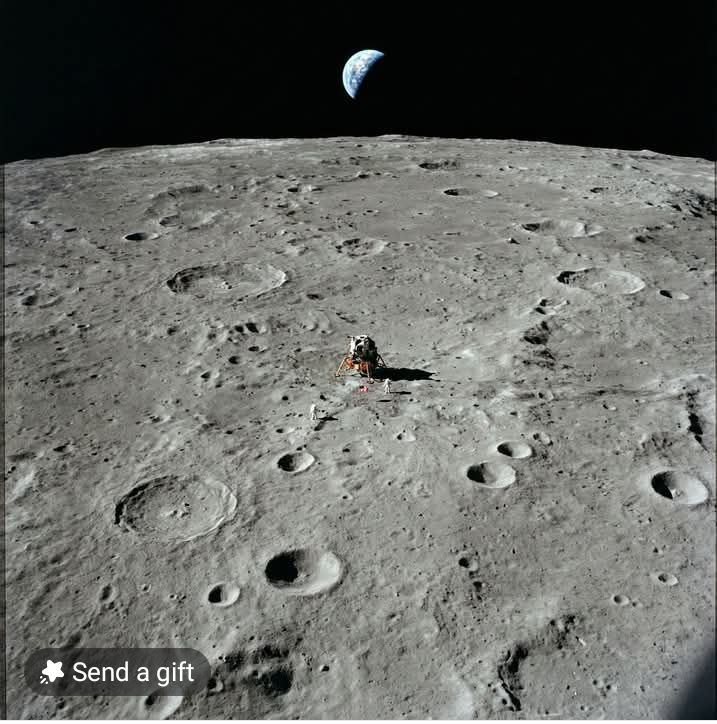
    🌕🌍 A tiny outpost on a vast, ancient Moon. This breathtaking Apollo mission image shows the Lunar Module resting on the Moon’s heavily cratered surface, with Earth rising quietly above the horizon. The countless impact craters tell a story billions of years old, while the small human presence below highlights the scale of this historic achievement. Captured by NASA, scenes like this demonstrated precision lunar landing, surface operations, and deep-space navigation milestones that reshaped space exploration. Today, the lessons from Apollo continue to guide future Moon missions, influencing NASA’s Artemis program and next-generation exploration with SpaceX as humanity prepares to return to the lunar surface. #space #spacex #nasa #fblifestyle
    ·128 Views ·0 Anteprima
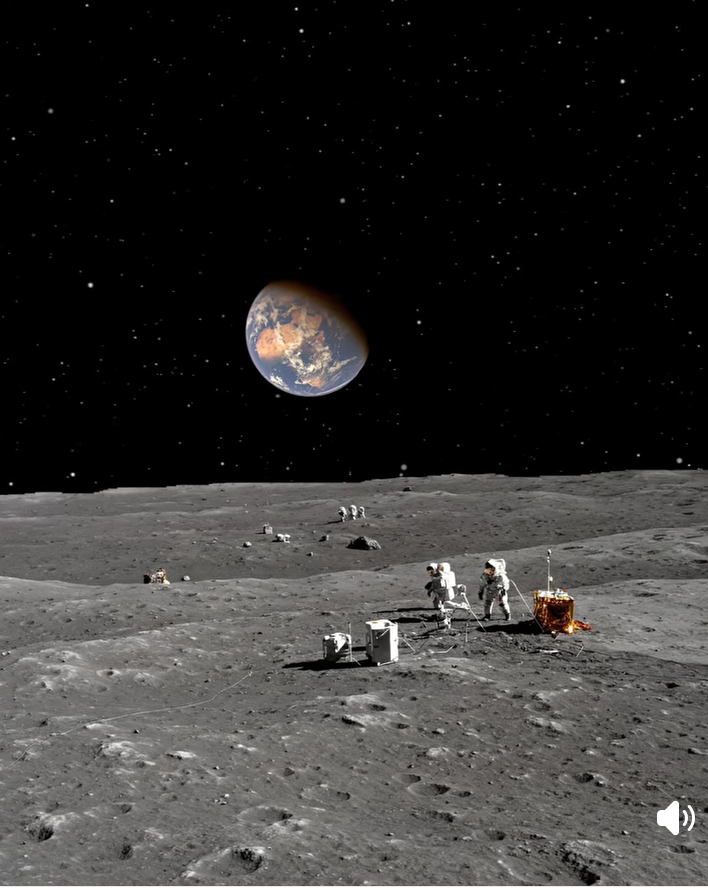
  • A Historic Apollo Moment: Earth From the Moon
    During the Apollo missions, astronauts captured one of the most iconic views in history Earth seen from the surface of the Moon.From that distance, our planet looked small, bright, and incredibly fragile.This moment, known as Earthrise, changed how humanity sees the world and reminded us that we all share one home in the vast universe.
    A breathtaking view from another world.

    #space #spacex #nasa #fblifestyle
    A Historic Apollo Moment: Earth From the Moon During the Apollo missions, astronauts captured one of the most iconic views in history Earth seen from the surface of the Moon.From that distance, our planet looked small, bright, and incredibly fragile.This moment, known as Earthrise, changed how humanity sees the world and reminded us that we all share one home in the vast universe. A breathtaking view from another world. 🌍🌙✨ #space #spacex #nasa #fblifestyle
    ·114 Views ·0 Anteprima
  • On April 6, 1984, the Space Shuttle Challenger lifted off from Kennedy Space Center with its five-member crew for a six-day mission in orbit. Veteran astronaut John Young, who had flown six spaceflights including two shuttle missions, captured this iconic image with a handheld 70mm camera from a shuttle training aircraft. Young used the aircraft to monitor environmental conditions around Florida, and this marked the eighth mission on which he photographed a shuttle vehicle during its ascent to orbit. The photograph beautifully captures the shuttle’s powerful climb into space, with flames and smoke trailing behind as it begins its journey above the clouds.

    Image Credit: NASA
    On April 6, 1984, the Space Shuttle Challenger lifted off from Kennedy Space Center with its five-member crew for a six-day mission in orbit. Veteran astronaut John Young, who had flown six spaceflights including two shuttle missions, captured this iconic image with a handheld 70mm camera from a shuttle training aircraft. Young used the aircraft to monitor environmental conditions around Florida, and this marked the eighth mission on which he photographed a shuttle vehicle during its ascent to orbit. The photograph beautifully captures the shuttle’s powerful climb into space, with flames and smoke trailing behind as it begins its journey above the clouds. Image Credit: NASA
    ·85 Views ·0 Anteprima
  • Journey home across a silent world.
    This powerful Apollo-era image shows the command module flying above the Moon’s cratered surface, with Earth rising in the distance like a glowing beacon. After days of exploration on the lunar surface, this spacecraft carried astronauts safely back from orbit marking one of humanity’s greatest engineering and navigation achievements.
    Captured by NASA during the Apollo missions, scenes like this proved that deep-space travel, lunar orbit operations, and safe return to Earth were possible. This legacy now fuels modern spaceflight ambitions, inspiring future Moon missions and deep-space journeys supported by SpaceX and next-generation technology.

    #space #spacex #nasa #fblifestyle
    🌍🚀 Journey home across a silent world. This powerful Apollo-era image shows the command module flying above the Moon’s cratered surface, with Earth rising in the distance like a glowing beacon. After days of exploration on the lunar surface, this spacecraft carried astronauts safely back from orbit marking one of humanity’s greatest engineering and navigation achievements. Captured by NASA during the Apollo missions, scenes like this proved that deep-space travel, lunar orbit operations, and safe return to Earth were possible. This legacy now fuels modern spaceflight ambitions, inspiring future Moon missions and deep-space journeys supported by SpaceX and next-generation technology. #space #spacex #nasa #fblifestyle
    ·111 Views ·0 Anteprima
  • Fewer than 7% of patients survive glioblastoma — but that grim statistic may soon begin to shift.
    A major new study points to a simple nasal spray as a potential game-changer against glioblastoma, one of the most aggressive and treatment-resistant brain cancers known. With just 6.9% of patients living beyond five years, glioblastoma has remained devastating largely because of its location in the brain and its remarkable ability to evade conventional therapies.
    Researchers from Washington University and the University of Electro-Communications in Japan have now engineered an innovative nanotechnology-based delivery system that may finally bypass these barriers. By coating STING-activating immune molecules onto gold nanoparticles—creating what are known as spherical nucleic acids (SNAs)—scientists produced a stable therapeutic compound capable of being administered noninvasively through the nose, allowing direct access to the brain.
    In mouse studies, this intranasal treatment successfully activated the immune system within the tumor environment and slowed cancer growth. Importantly, the technique avoids the brain’s formidable protective filters and may pave the way for treating other cancers that typically resist immune-based therapies.
    While still in the preclinical phase, the findings represent a promising leap toward minimally invasive and more effective approaches for brain tumors. Researchers are particularly hopeful that pairing this intranasal SNA therapy with additional immune-enhancing treatments could one day provide lasting control—and possibly prevention—of glioblastoma. For patients facing a disease with limited options, this emerging strategy offers a rare and meaningful sense of hope.
    Source: Xu, Z. et al. (2025). cGAS-agonistic spherical nucleic acids reprogram the glioblastoma immune microenvironment and promote antitumor immunity. PNAS.

    Fewer than 7% of patients survive glioblastoma — but that grim statistic may soon begin to shift. A major new study points to a simple nasal spray as a potential game-changer against glioblastoma, one of the most aggressive and treatment-resistant brain cancers known. With just 6.9% of patients living beyond five years, glioblastoma has remained devastating largely because of its location in the brain and its remarkable ability to evade conventional therapies. Researchers from Washington University and the University of Electro-Communications in Japan have now engineered an innovative nanotechnology-based delivery system that may finally bypass these barriers. By coating STING-activating immune molecules onto gold nanoparticles—creating what are known as spherical nucleic acids (SNAs)—scientists produced a stable therapeutic compound capable of being administered noninvasively through the nose, allowing direct access to the brain. In mouse studies, this intranasal treatment successfully activated the immune system within the tumor environment and slowed cancer growth. Importantly, the technique avoids the brain’s formidable protective filters and may pave the way for treating other cancers that typically resist immune-based therapies. While still in the preclinical phase, the findings represent a promising leap toward minimally invasive and more effective approaches for brain tumors. Researchers are particularly hopeful that pairing this intranasal SNA therapy with additional immune-enhancing treatments could one day provide lasting control—and possibly prevention—of glioblastoma. For patients facing a disease with limited options, this emerging strategy offers a rare and meaningful sense of hope. Source: Xu, Z. et al. (2025). cGAS-agonistic spherical nucleic acids reprogram the glioblastoma immune microenvironment and promote antitumor immunity. PNAS.
    ·99 Views ·0 Anteprima
  • In 2002, Elon Musk sold PayPal and walked away with $180 million.
    For most people, that would have been the finish line—a fortune large enough to guarantee comfort for life.

    But Musk didn’t see it that way. He saw it as a starting line.

    He poured nearly every dollar into two ideas the world thought were insane: building reusable rockets and making electric cars mainstream.

    By 2008, both Tesla and SpaceX were in freefall. Musk was borrowing money just to pay rent, working 20-hour days, and dividing what little he had between the two companies. Even his closest friends thought he was destined to fail.

    And then, in the span of a single week, everything flipped.
    SpaceX secured a NASA contract. Tesla landed crucial investment. Both companies survived—barely.

    From that point on, the trajectory changed forever.
    Today, Tesla and SpaceX are worth hundreds of billions of dollars—the kind of outcome that looked impossible when Musk was one step away from losing everything.

    His story isn’t just about wealth or technology. It’s about how conviction, vision, and resilience can bend reality.

    Here are 3 timeless lessons we can take from it:

    1. Don’t just preserve—allocate toward possibility. Wealth and security are fragile when they simply sit idle. Musk risked his fortune on shaping what could be, not on guarding what already was.

    2. Play long-term games with long-term vision. Both Tesla and SpaceX were designed for horizons decades away. Most people give up too early because they’re measuring progress in months, not decades.

    3. Understand that pressure precedes breakthroughs. Musk’s lowest point was the exact moment before things turned. In business and life, the collapse you fear can often be the prelude to transformation—if you stay in the game long enough.

    As Musk himself said:
    “When something is important enough, you do it even if the odds are not in your favor.”

    Most people guard what they have. Musk risked everything for a future that didn’t exist yet.
    That’s why the world looks different today.
    In 2002, Elon Musk sold PayPal and walked away with $180 million. For most people, that would have been the finish line—a fortune large enough to guarantee comfort for life. But Musk didn’t see it that way. He saw it as a starting line. He poured nearly every dollar into two ideas the world thought were insane: building reusable rockets and making electric cars mainstream. By 2008, both Tesla and SpaceX were in freefall. Musk was borrowing money just to pay rent, working 20-hour days, and dividing what little he had between the two companies. Even his closest friends thought he was destined to fail. And then, in the span of a single week, everything flipped. SpaceX secured a NASA contract. Tesla landed crucial investment. Both companies survived—barely. From that point on, the trajectory changed forever. Today, Tesla and SpaceX are worth hundreds of billions of dollars—the kind of outcome that looked impossible when Musk was one step away from losing everything. His story isn’t just about wealth or technology. It’s about how conviction, vision, and resilience can bend reality. Here are 3 timeless lessons we can take from it: 1. Don’t just preserve—allocate toward possibility. Wealth and security are fragile when they simply sit idle. Musk risked his fortune on shaping what could be, not on guarding what already was. 2. Play long-term games with long-term vision. Both Tesla and SpaceX were designed for horizons decades away. Most people give up too early because they’re measuring progress in months, not decades. 3. Understand that pressure precedes breakthroughs. Musk’s lowest point was the exact moment before things turned. In business and life, the collapse you fear can often be the prelude to transformation—if you stay in the game long enough. As Musk himself said: “When something is important enough, you do it even if the odds are not in your favor.” Most people guard what they have. Musk risked everything for a future that didn’t exist yet. That’s why the world looks different today.
    Like
    2
    1 Commenti ·120 Views ·0 Anteprima
EarnNaija https://earnnaija.com